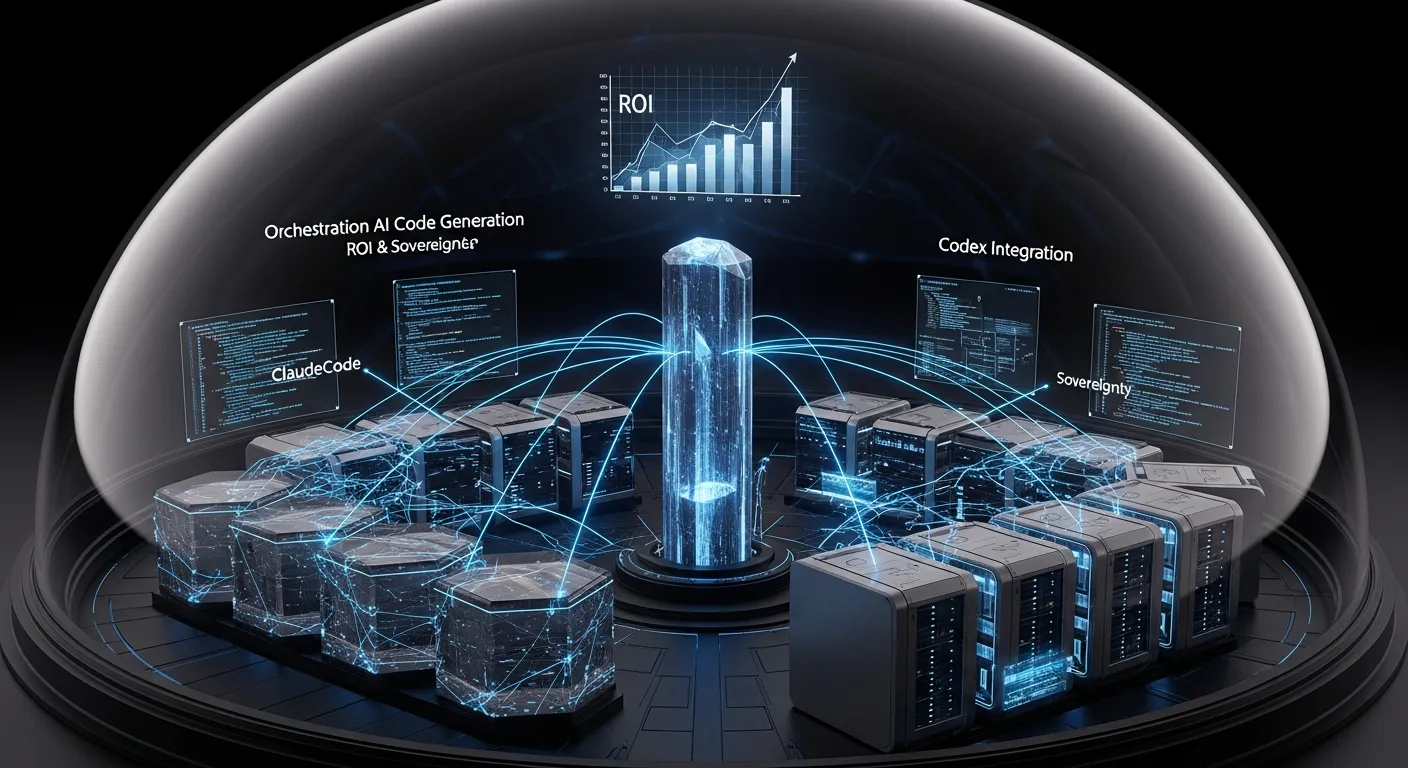
Seamlessly Integrate ClaudeCode and Codex for Enhanced Code Generation: A CTO’s ROI & Serenity Guide
The original Reddit post, « Handover between CC and Codex, » highlights a common challenge when leveraging multiple AI code generation tools: the friction and inefficiency of passing context and generated code between different models. Users often find themselves copying and pasting, manually reformatting, or losing valuable context, diminishing productivity and increasing the risk of errors. This guide provides a robust technical strategy to achieve a smooth, efficient, and error-free handover between ClaudeCode (CC) and Codex, maximizing your return on investment (ROI) and ensuring operational serenity.
💻 Pack Master Dev
Automatise ton code et tes tests avec les meilleurs outils IA.
1. Architectural Blueprint: The Orchestration Layer
The core of our solution lies in an intermediary « orchestration layer. » This layer acts as a smart hub, managing the flow of information between ClaudeCode and Codex. Instead of direct user interaction with each model in isolation, all requests and responses are routed through this central component.
Key Components:
- Context Manager: This module is responsible for aggregating and maintaining the current state of the coding task. It stores the user’s initial prompt, previous code snippets, model-specific outputs, and any relevant metadata.
- Model Dispatcher: Based on the task type or user configuration, this component decides which model (ClaudeCode or Codex) should process the current request. It can be programmed to prioritize one model for certain tasks (e.g., initial code generation) and the other for refinement or specific code styles.
- Response Aggregator & Formatter: This module receives outputs from both models, compares them, and intelligently merges or selects the best parts. It handles reformatting to ensure consistency before presenting it to the user or passing it back into the context for further processing.
Implementation Strategy:
We recommend building this orchestration layer as a lightweight microservice. This allows for independent scaling and easy integration with existing development workflows. Technologies like FastAPI (Python) or Express.js (Node.js) are excellent choices for rapid development.
2. Code Integration & Prompt Engineering for Seamless Handovers
The effectiveness of our orchestration layer hinges on intelligent prompt engineering and standardized output formats.
Prompt Engineering Tactics:
- Contextual Priming: When handing off a task from ClaudeCode to Codex (or vice-versa), the prompt must include a concise summary of the previous interaction and the desired next step. For example: « You have generated the following Python function
calculate_averageusing ClaudeCode. Refactor it to handle edge cases where the input list is empty and add docstrings. » - Structured Output Request: Explicitly request output in a machine-readable format. JSON is ideal for this. For instance, ask models to return their code in a JSON object with keys like
code,language,explanation, andconfidence_score.
Example (Conceptual Python):
def generate_code_with_context(user_request: str, previous_context: dict, model_preference: str):
    if model_preference == "codex":
        prompt = f"""
        Context: {previous_context.get('explanation', '')}
        Previous Code:
        ```python
        {previous_context.get('code', '')}
        ```
        Task: {user_request}
        Please provide the refactored code in JSON format with keys 'code', 'language', and 'explanation'.
        """
        # Call Codex API with 'prompt'
        response = call_codex_api(prompt)
        return response.json()
    else:
        # Logic for ClaudeCode
        pass

# In orchestration layer:
initial_gen_response = call_claude_code_api(initial_prompt)
refactor_request = "Add error handling for invalid input types."
refactored_code_response = generate_code_with_context(
    user_request=refactor_request,
    previous_context={"code": initial_gen_response["code"], "explanation": initial_gen_response["explanation"]},
    model_preference="codex"
)
3. Tooling & Infrastructure for Sovereignty
To ensure maximum control, ROI, and serenity, we advocate for self-hosted or sovereignty-focused solutions.
Recommended Stack:
- Orchestration Service: Deployed on a virtual private server (VPS) or a dedicated server in a French or German datacenter.
- LLM Model Hosting:
- Codex (via Azure OpenAI Service): While not fully self-hosted, Azure offers strong data residency and compliance options within Europe. Monitor their latest offerings for on-premises or private cloud deployments.
- ClaudeCode (Anthropic): Similar to Codex, leverage their enterprise offerings with robust data protection guarantees and consider their availability through cloud providers with European presence. For true self-hosting of open-source alternatives that can mimic these capabilities, explore models like Llama 2/3, Mixtral, or Falcon, deployed using tools like Ollama or Text Generation Inference (TGI) on your own infrastructure. This gives you complete data sovereignty.
- API Gateway: For secure and managed access to your services.
- Logging & Monitoring: Tools like ELK Stack (Elasticsearch, Logstash, Kibana) or Grafana/Prometheus for performance tracking and debugging, hosted locally.
L’avis du Labo : L’intégration de plusieurs LLMs est une tendance stratégique forte pour les équipes de développement. En automatisant l’orchestration et en standardisant les formats d’échange, on ne se contente pas de résoudre un problème tactique de copier-coller. On bâtit une plateforme de génération de code plus résiliente, adaptable et capable de tirer parti des forces spécifiques de chaque modèle, tout en maîtrisant les coûts et la conformité des données. L’hébergement souverain, en France ou en Allemagne, est un levier de sérénité incomparable face aux évolutions réglementaires et aux exigences de sécurité.
CONCLUSION
Implementing an orchestration layer with intelligent prompt engineering and a focus on sovereign infrastructure is the path to unlocking the full potential of AI code generation. By transforming manual handovers into automated, context-aware processes, you will significantly boost developer productivity, reduce errors, and gain peace of mind. Start by prototyping the orchestration layer and incrementally integrate the advanced prompt strategies. Prioritize self-hosted or European-based cloud solutions to maintain control over your data and ensure long-term operational serenity.